1. Overview
Ultraviolet (UV) radiation analysis plays a central role in water treatment, semiconductor ultrapure water (UPW), biological disinfection and other fields. Numerical analysis based on the radiative transfer equation (RTE) offers high accuracy, but the complex scattering terms and integral operations make it comparatively expensive, and the models are specialised for heat transfer rather than UV radiation.
This article introduces UVSim3D, an in-house UV radiation code built on Bolton’s MSSS (Multiple Segment Source Summation) model. The code has been extended to the VUV (vacuum UV, 185 nm) range, and we verify its accuracy and computational efficiency by comparison against published data.
2. Theoretical background
At the UV wavelengths below 300 nm typically used for disinfection, absorption by the medium dominates, and scattering and emission are negligible. Dropping the scattering and emission terms from the RTE therefore simplifies it to
where Iλ is the radiative intensity at wavelength λ, s is the ray path length, and κλ is the absorption coefficient of the medium.
Integrating gives the Beer–Lambert law:
This is the particular solution of the RTE for an absorption-dominant medium with scattering and emission removed, and it retains high accuracy in optically clear media such as UV water treatment and UPW processes.
Adding refraction and reflection at air, quartz sleeve and water interfaces, together with attenuation over distance, yields the MPSS (Multiple Point Source Summation) and MSSS (Multiple Segment Source Summation) models widely used in water treatment. The MSSS model proposed by Bolton (2003) in particular has served as a validated standard in UV reactor design for over twenty years.
3. Computation and validation
UV radiation analysis normally couples a CFD flow solution with the radiation model in order to evaluate the UV dose received by particles — viruses, bacteria, compounds — carried in the water. Because the flow and the UV field interact hardly at all, however, it is common at the early design stage to run the radiation analysis alone. This study therefore excludes the flow analysis and verifies the accuracy of UVSim3D using the Beer–Lambert-based radiation model on its own.
3.1 Single lamp in air
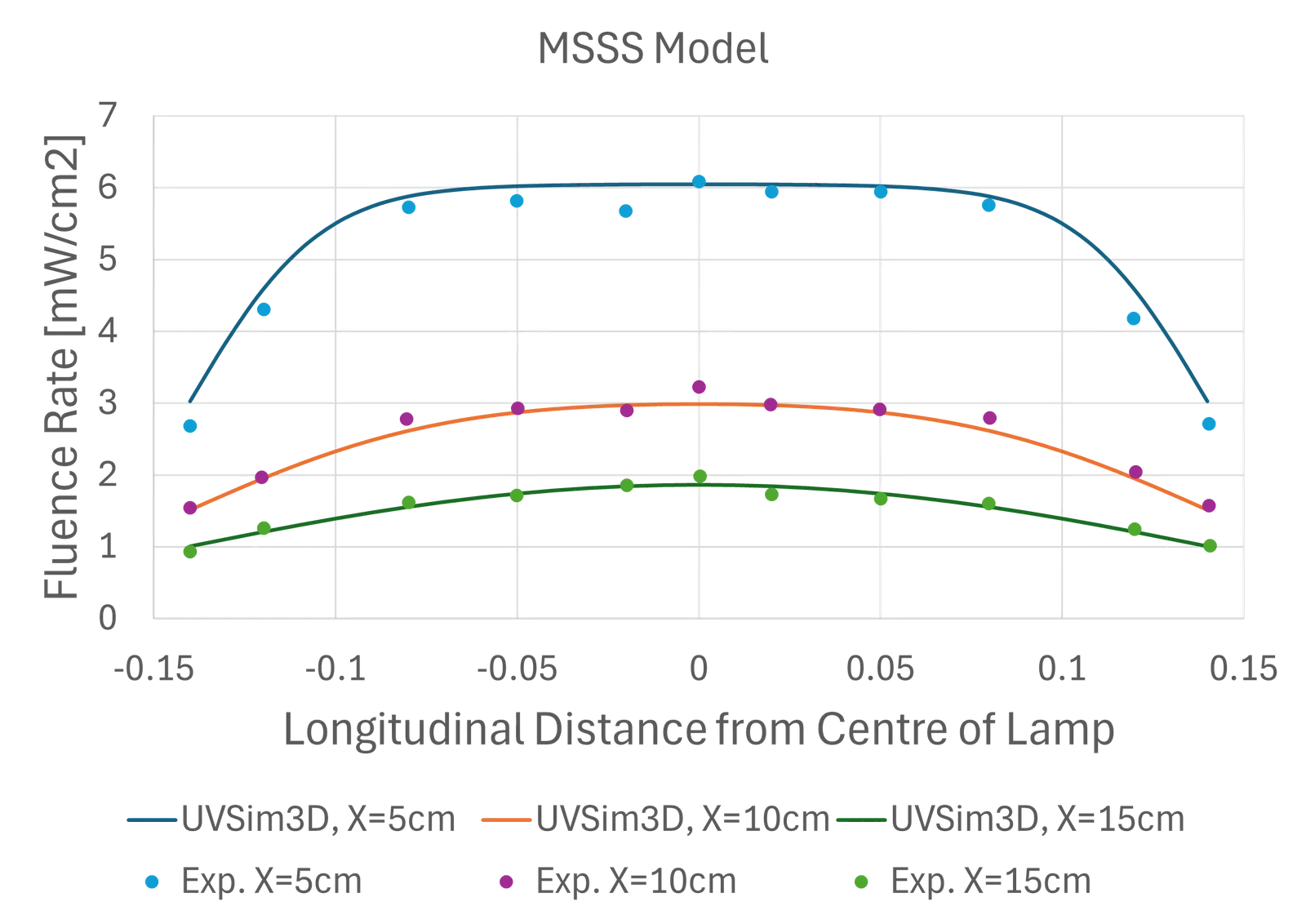
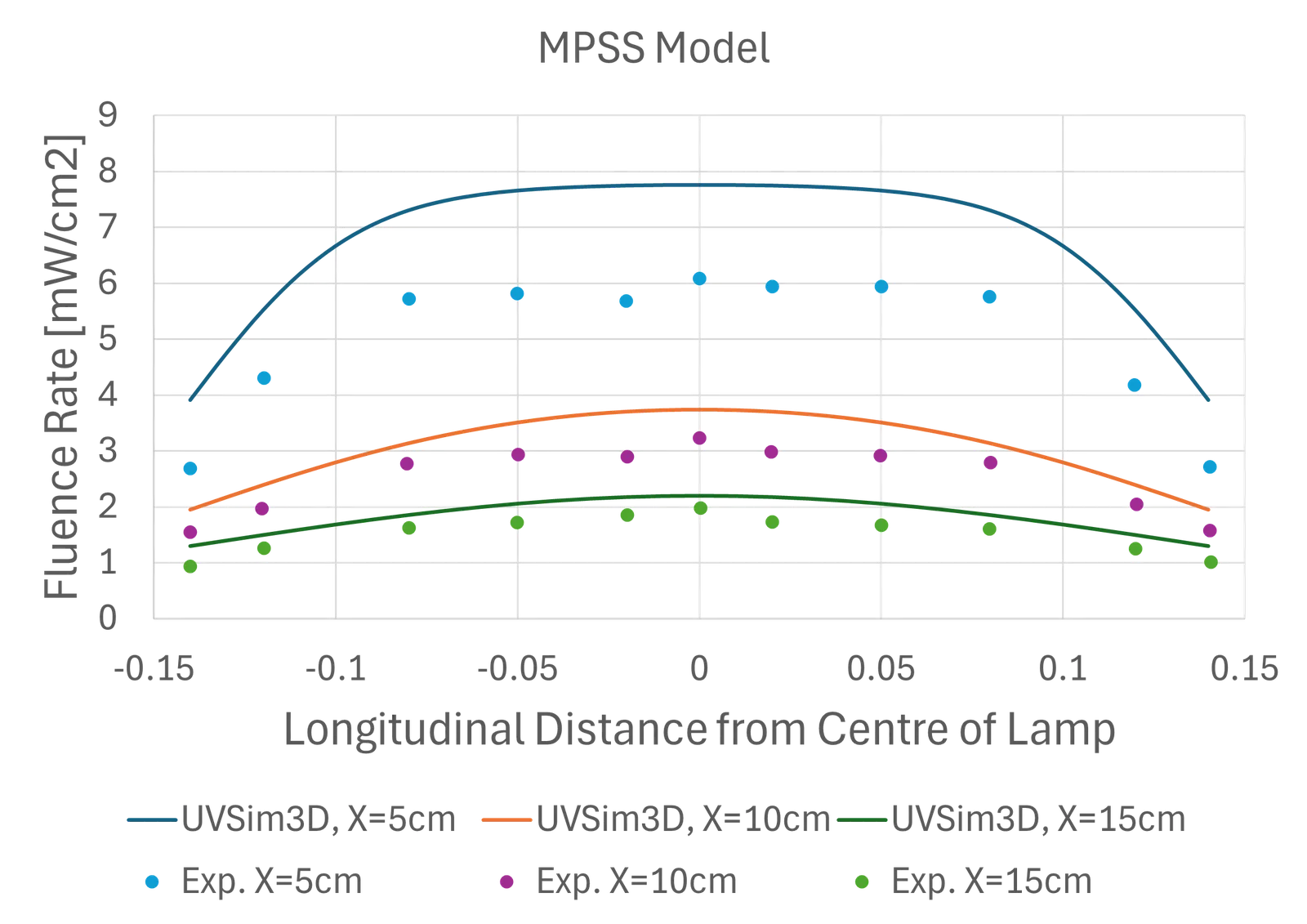
We first computed the UV distribution around a single lamp in air, without absorption by the medium. The reference is the experiment of Liu et al. (2004), against whose fluence rate measurements at 5 cm, 10 cm and 15 cm from the lamp centre the results are compared.
The MSSS model tracks the measurements closely in both the radial and axial directions. The MPSS model, by contrast, tends to overpredict the fluence rate near the lamp, whereas MSSS remains very accurate even in the lamp end region. That is because modelling the lamp as a set of segment sources rather than point sources reflects the refraction and reflection effects realistically.
3.2 UV disinfection pilot reactor
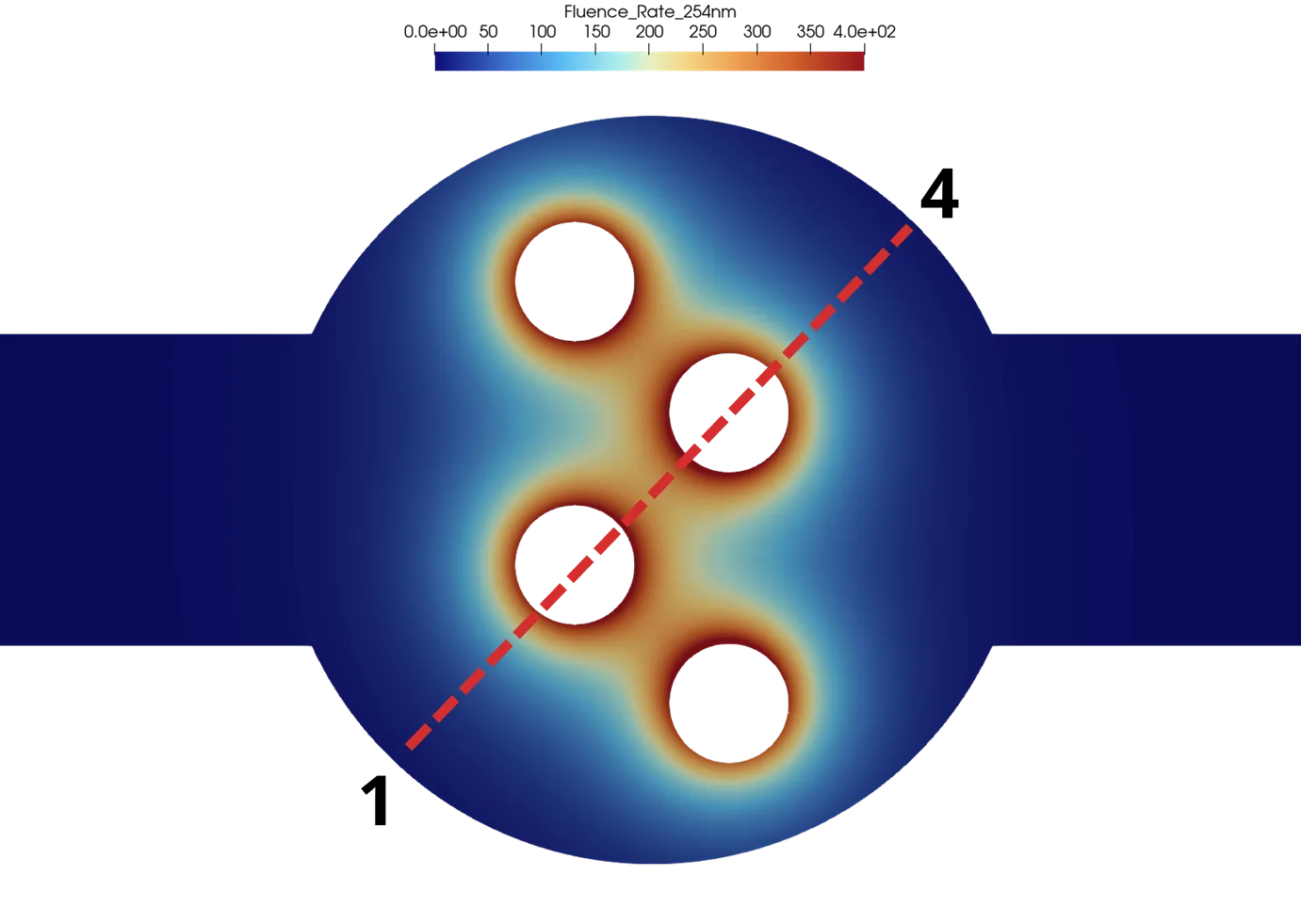
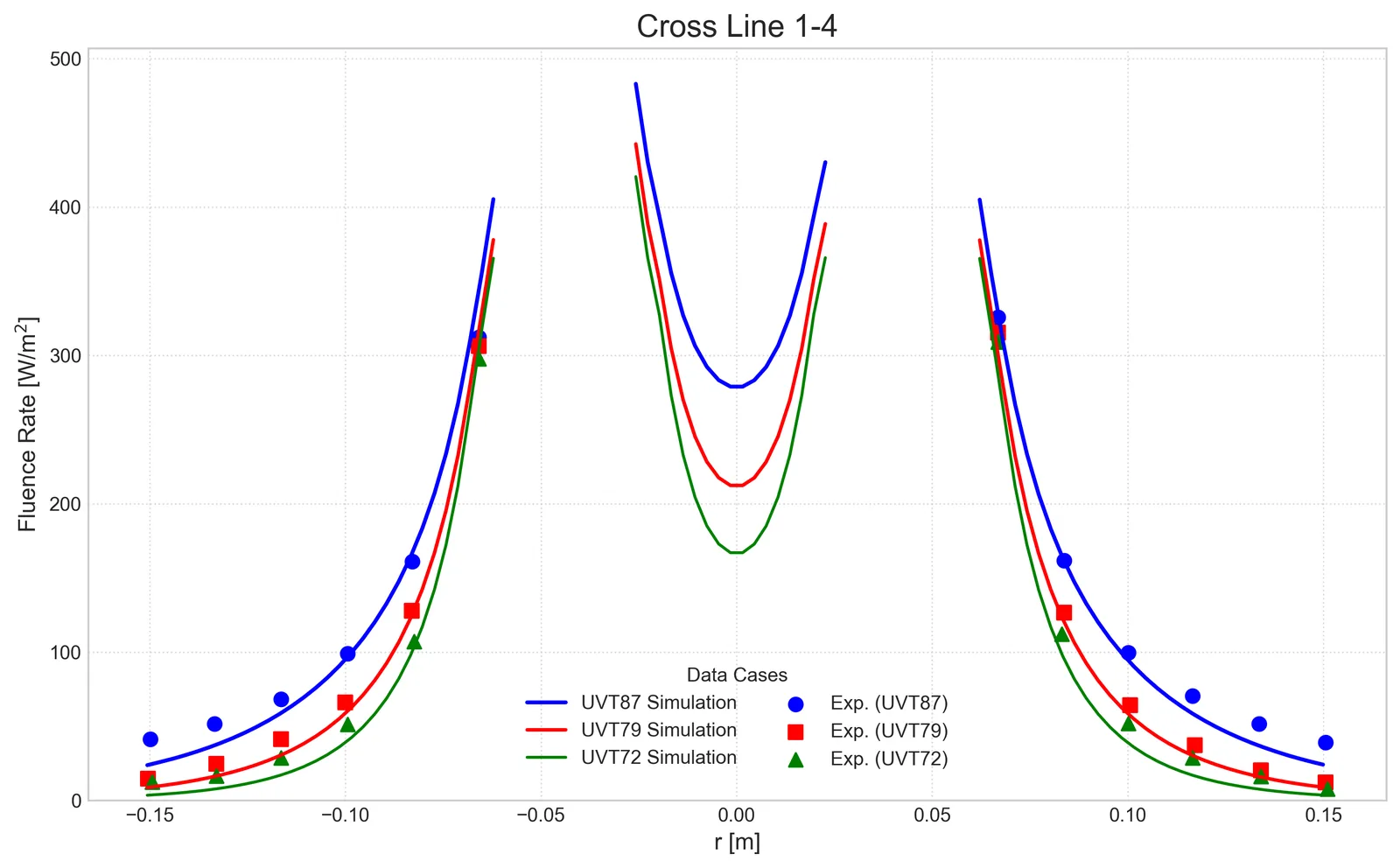
UV reactors for water treatment generally use several lamps, so validation continued on a pilot reactor closer to real conditions. The reference is the Delft University of Technology experiment of Wols et al. (2012), in which UV intensity was measured radially in a reactor with four low-pressure UV lamps (Heraeus NNI125 84KL). The UV transmittance (UVT) of the water was set to 72.5%, 79% and 87%.
UVSim3D predicts a higher UV intensity at the centre of the reactor, where the fields of adjacent lamps overlap, and the mean error against the experimental data is below 5% — very good agreement. In particular, the attenuation caused by differences in water quality, that is in UVT, is predicted reliably.
3.3 VUV/UV photoreactor
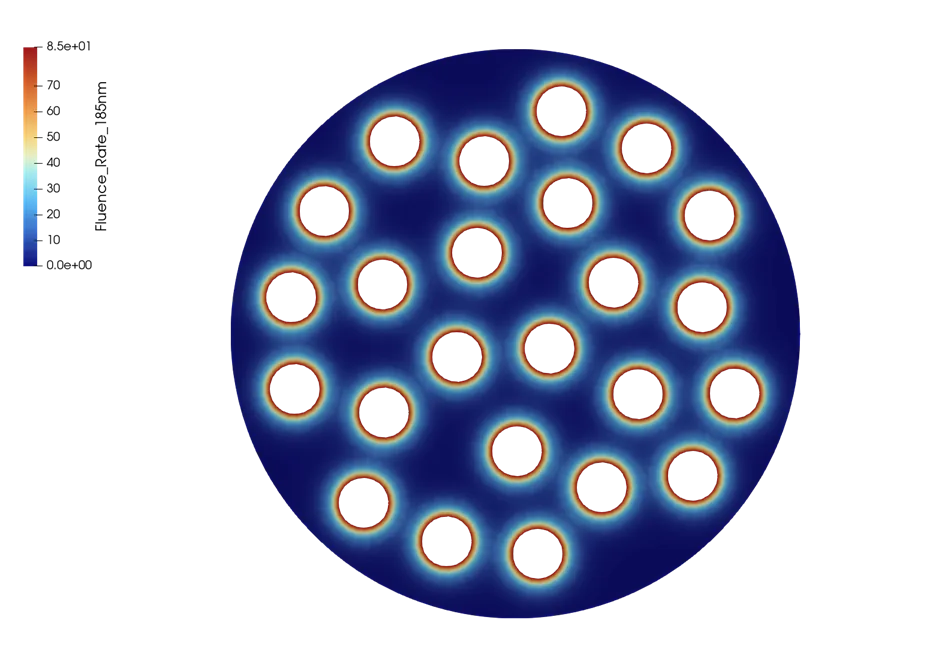
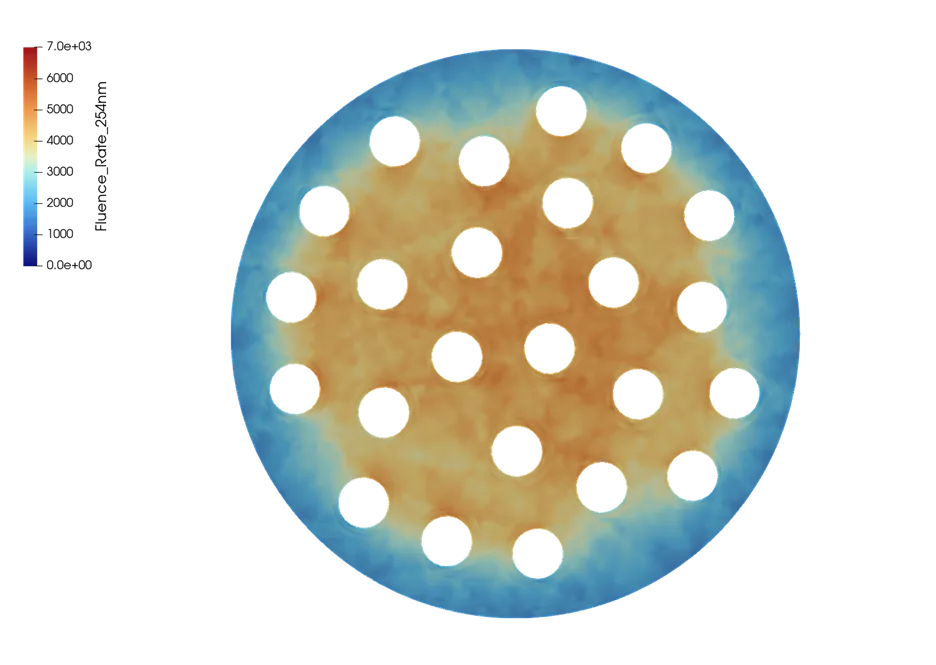
Low-pressure UV lamps are used for disinfection in the 254 nm band, but in the 185 nm band they can drive photochemical reactions. A 185 nm photon breaks the bond energy of the water molecule (H₂O) to produce the hydroxyl radical (•OH), which oxidises organic matter and is used in the production of ultrapure water (UPW).
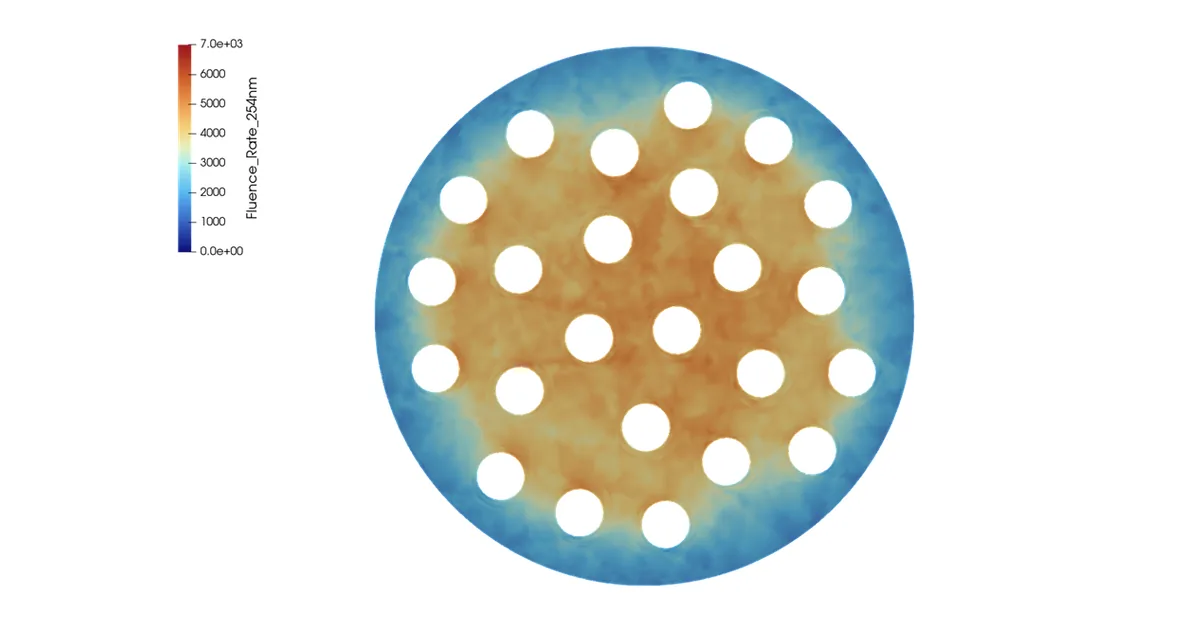
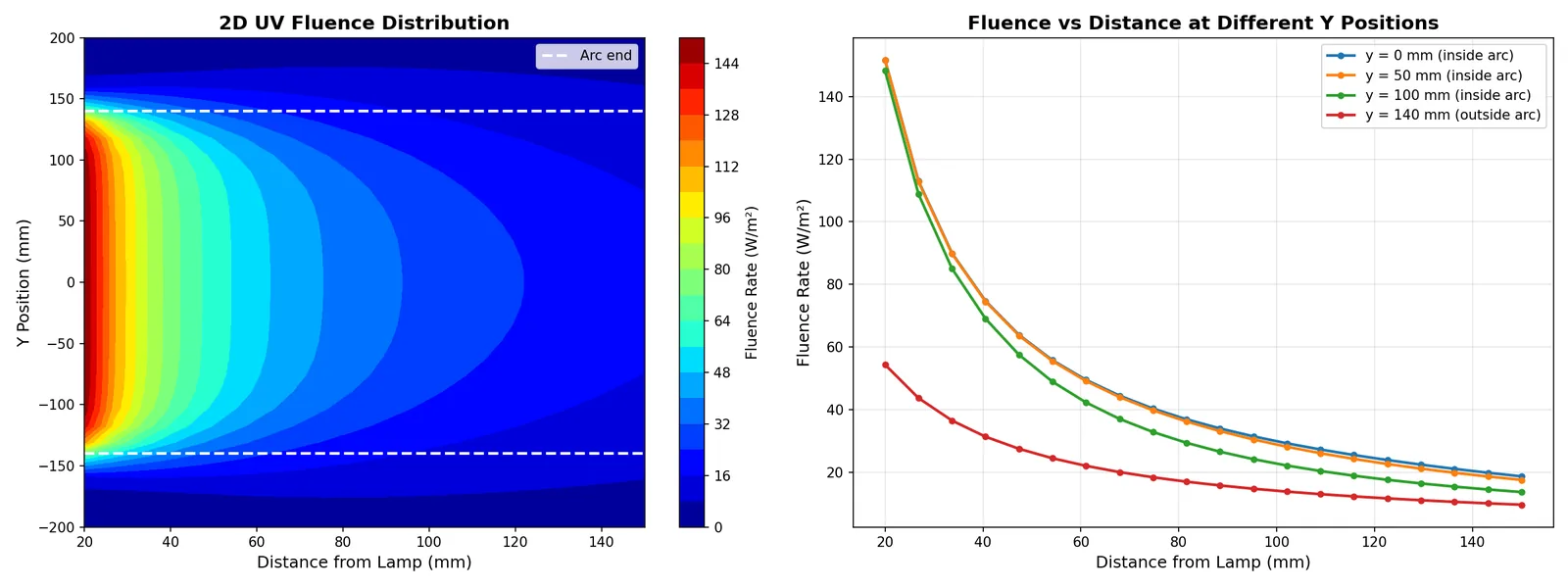
Experimental measurement in the 185 nm band is hazardous to people and expensive, so there is almost no published or obtainable data. We therefore computed the fluence rate distribution at 185 nm and 254 nm for one real reactor geometry, as shown below.
4. Conclusions
The Beer–Lambert-based MSSS radiation model provides sufficient predictive accuracy for the design stage of industrial UV reactors, where absorption dominates. It runs roughly 10 to 15 times faster than an RTE-based model, which makes it highly practical for early reactor design and lamp array optimisation.
The model is also applicable to the design of UV oxidation units in semiconductor UPW production, to performance prediction and verification for water treatment and disinfection equipment, and to spectral analysis of multi-wavelength UV systems.
Acknowledgements
- This work was supported by Korea Environment Industry & Technology Institute (KEITI) through the High Purity Industrial Water Domestic Production Technology Development Project, funded by the Korea Ministry of Environment (MOE) (20210032002).
References
- (1) Bird, R. B., et al. (1983). Radiative Transfer and the Beer–Lambert Law, Journal of Heat Transfer, ASME.
- (2) Bolton, J. R., Linden, K. G. (2003). “Standardization of UV reactor performance using MPSS/MSSS,” IUVA Journal.
- (3) Liu, D. et al. (2004). “Evaluation of alternative fluence rate distribution models,” Journal of Water Supply: Research and Technology — Aqua, 53(6):391–408.
- (4) Wols, B. et al. (2012). “Comparison of CFD, Biodosimetry and Lagrangian Actinometry to Assess UV Reactor Performance,” Journal of Environmental Engineering, DOI:10.1080/01919512.2012.651398.
- (5) Kim, H. et al. (2014). “A Study on CFD Methodology of the Performance Prediction for the UV Disinfection Reactor,” The KSFM Journal of Fluid Machinery.