Why Boreas
One engine for rapid design exploration and digital twins
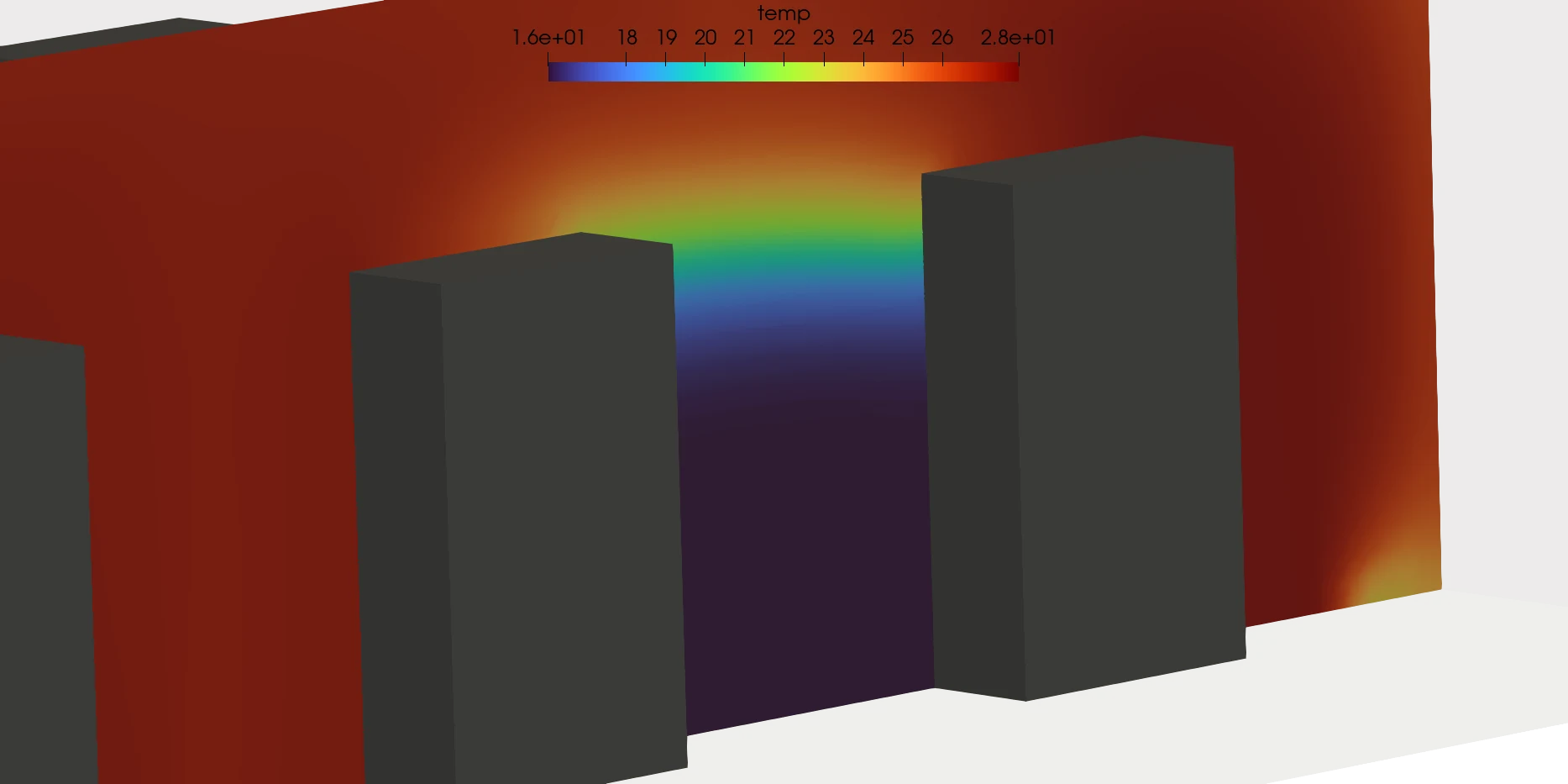
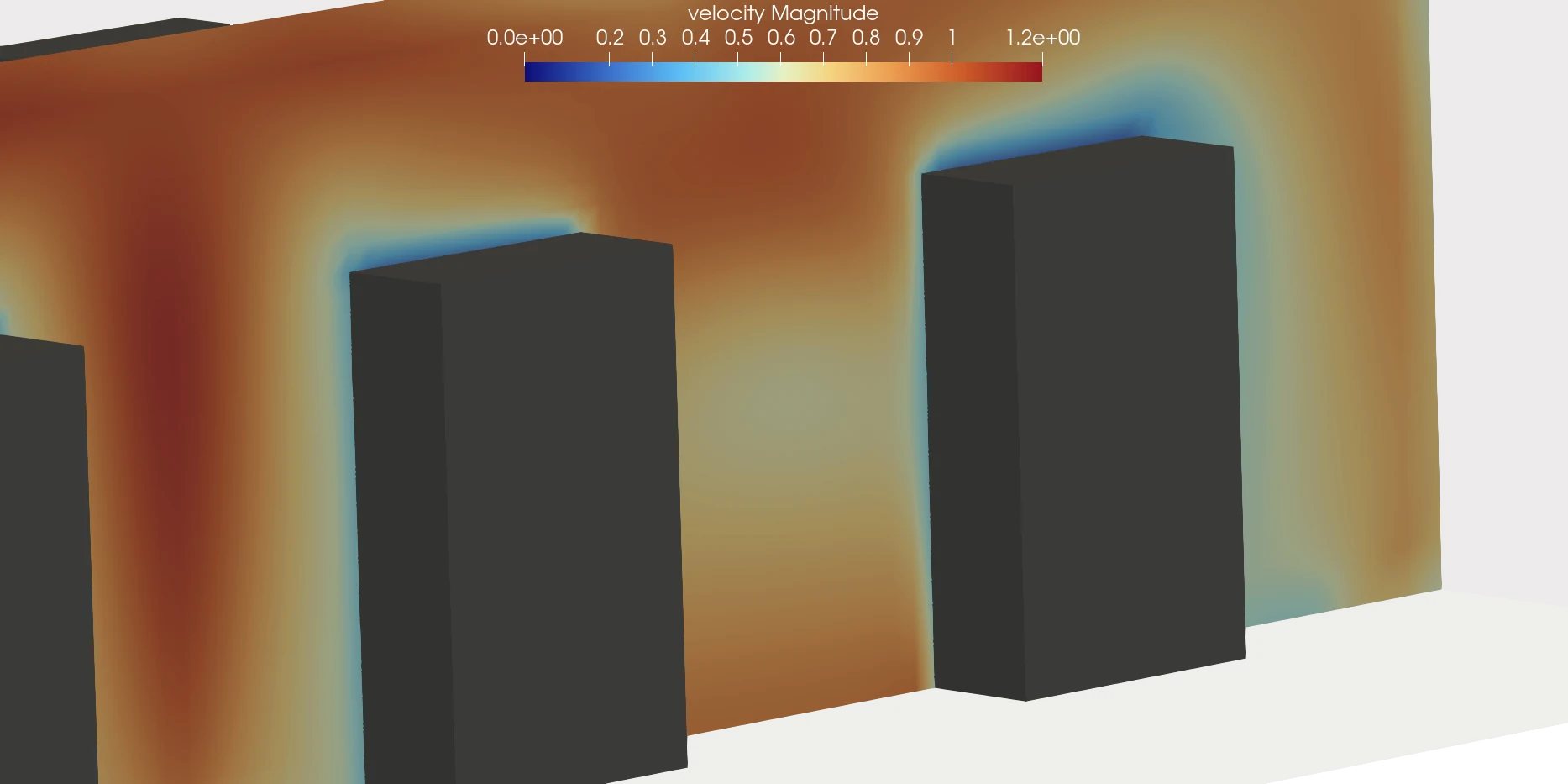
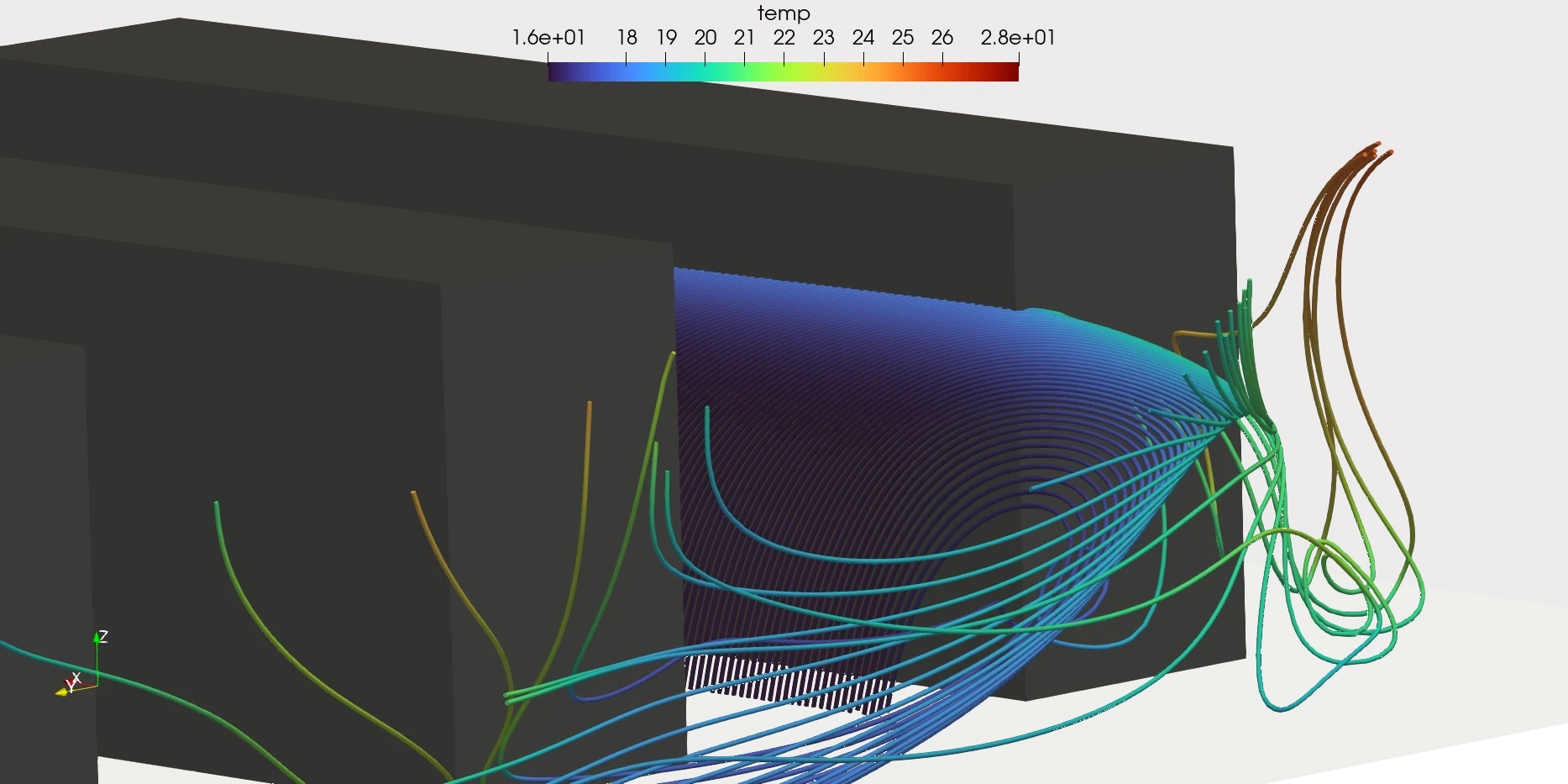
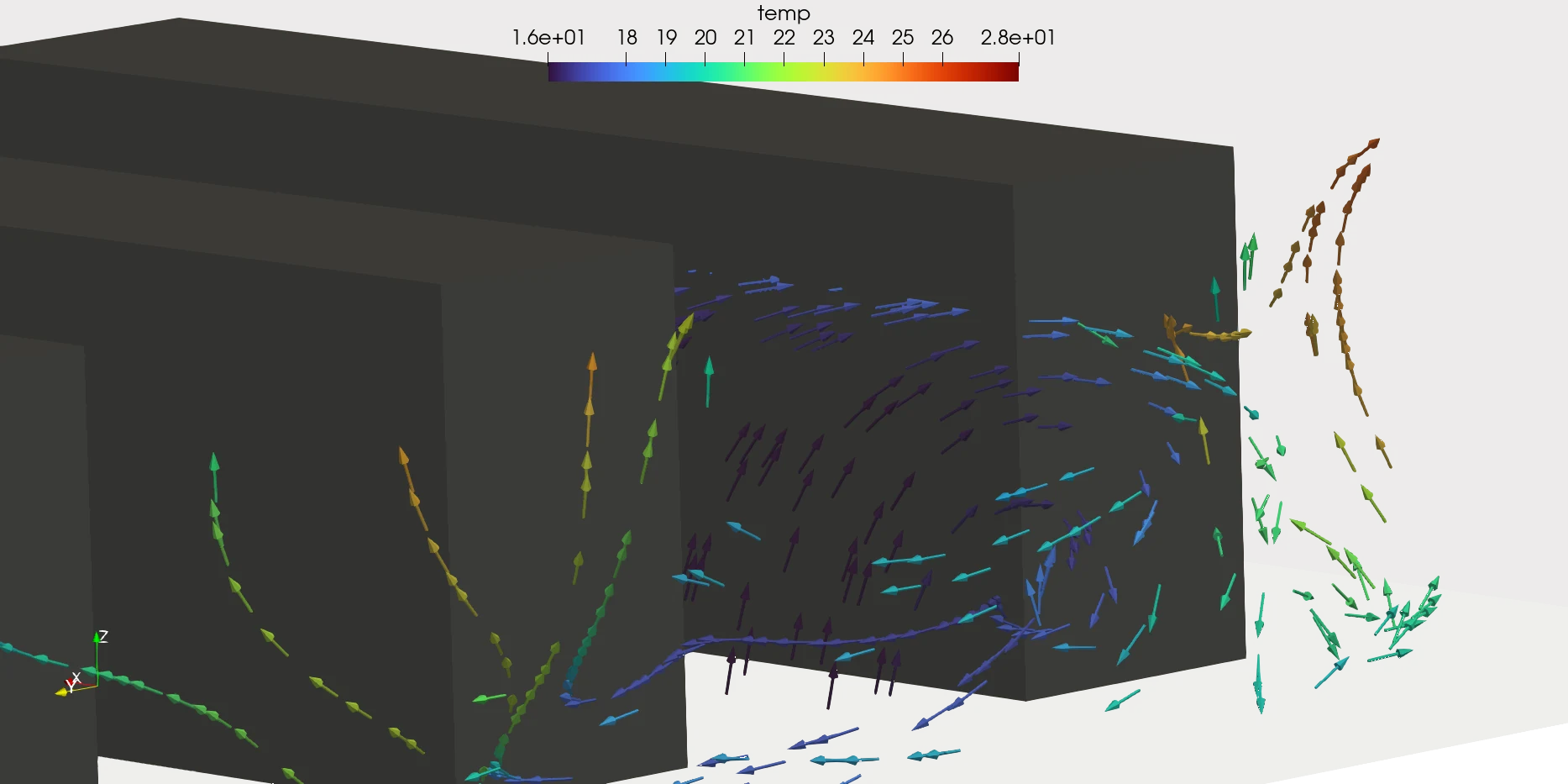
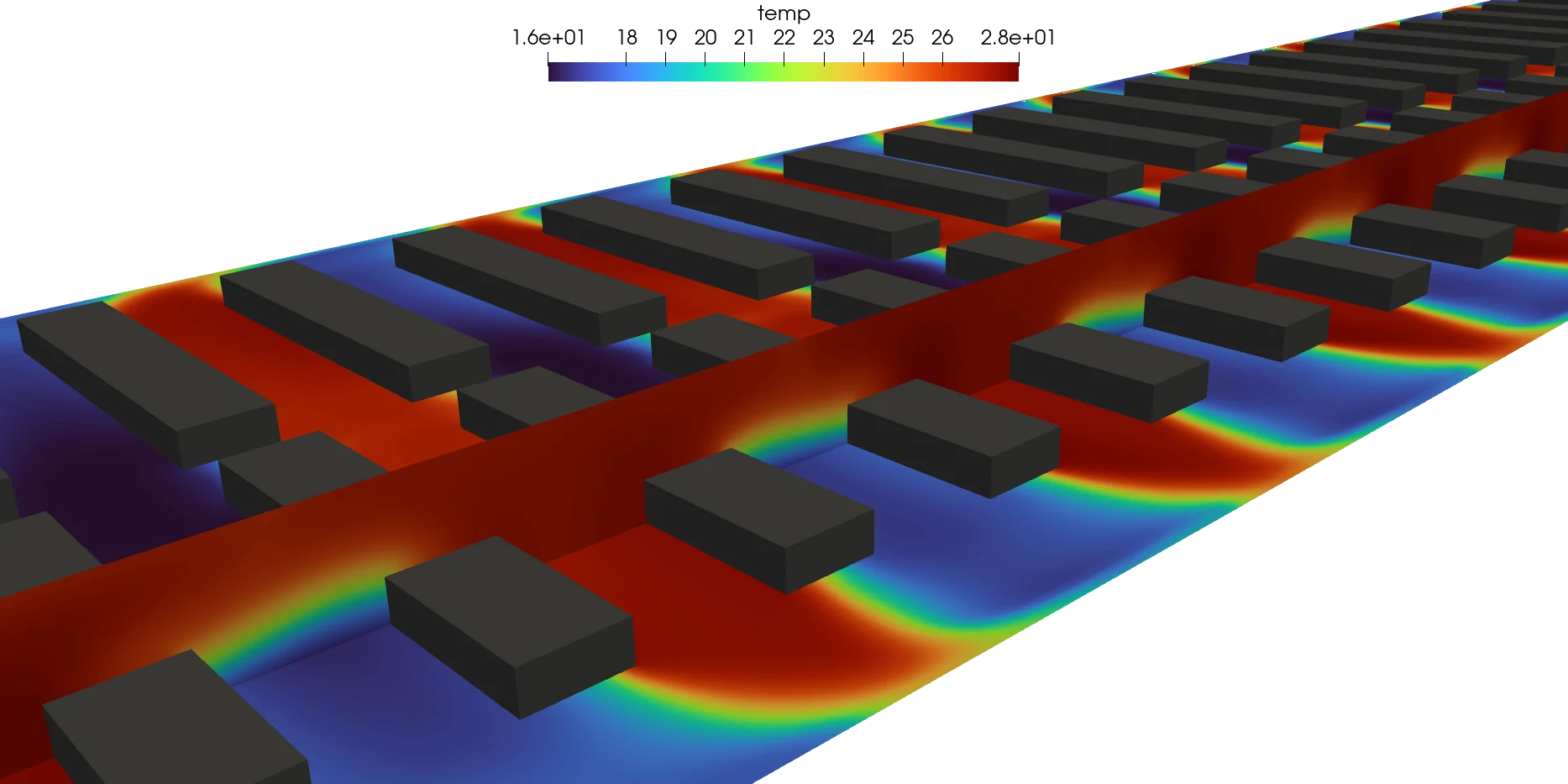
Early design requires the joint assessment of heat-source and equipment locations, aisles and structures, diffuser and return placement, and operating conditions. Boreas rapidly calculates temperature and airflow using a grid and numerical approach configured for the purpose. At lower grid resolution, it can also support near-real-time indoor environment simulation that responds to changes in equipment state and operating conditions.
Explore alternatives broadly during design, then use the same airflow and thermal engine as part of an operational digital twin.
Use it across design and operation
- Assess how heat-source, equipment and structural layouts affect indoor temperature and airflow
- Identify hot regions, stagnation and recirculation caused by supply and return locations and flow rates
- Compare the relative performance of rack arrangements, aisle configurations and circulator capacities
- Check steady-state heat and material balances, such as rack heat versus heat removed or contaminant generation versus exhaust
- Use a physics-based digital-twin engine to repeatedly calculate indoor conditions as equipment states and operating conditions change
Continue with detailed CFD when you need
- High-resolution assessment of near-wall boundary layers, diffuser jets, curved geometry or other local flow features
- Final design decisions or quantitative performance guarantees that require validated high-fidelity analysis
How it works
From design studies to digital-twin operation
- 01 Define
Describe the indoor geometry, heat sources, equipment, structures, supply and return layout, and operating conditions in one case file.
- 02 Configure
Set grid resolution and calculation conditions for either design screening or near-real-time operation.
- 03 Simulate
Use the octree grid and GPU-accelerated solver to calculate temperature, velocity and contaminant fields and heat and material balances.
- 04 Apply
Compare design options and select candidates for detailed CFD, or integrate Boreas as the indoor-environment engine of a digital twin.
Capabilities
Semi-Lagrangian advection with implicit diffusion and projection allows grid resolution and calculation settings to be tuned for near-real-time simulation.
Can serve as a physics-based engine that repeatedly calculates indoor airflow and thermal conditions as equipment states and operating conditions change.
Defines indoor spaces, equipment and structures from STL boundaries and builds a cell-octree Cartesian grid.
Buoyancy (Boussinesq), near-wall turbulence (Chen/LVEL), rack, air-conditioner and circulator recirculation, multiple species and age-of-air.
Runs on Windows and Linux, on GPU or CPU, using OpenMP for multicore.
Applications and technical resources
Explore application cases, validation results and technical articles related to Boreas.
Case Studies
Data Center Cooling Airflow Analysis with Boreas
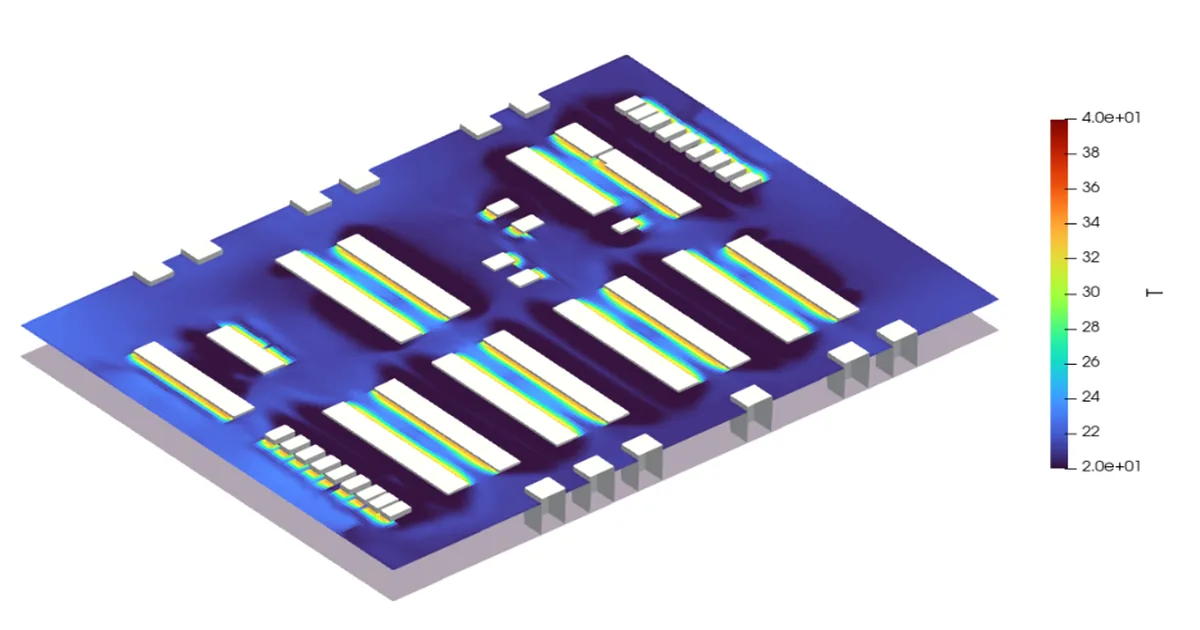
A case study analysing data center cooling airflow with Boreas, an FFD-based solver. The subject is a measured 151-rack, 344 kW facility whose layout and operating conditions are published, and the analysis produces the steady-state temperature field and per-rack inlet and outlet temperatures.
2026. 09. 09